Application Scenarios of 4G Solar-Powered Cameras
Application Scenarios of 4G Solar-Powered Cameras
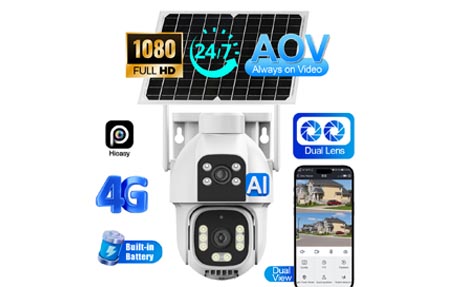
4G solar-powered cameras, leveraging their core advantages of wireless power supply via solar energy, 4G wireless connectivity, and no need for cabling, break through the limitations of traditional wired surveillance systems that rely on power grids and broadband infrastructure. They are widely used in remote areas, temporary settings, or regions with weak network coverage. Below are their key application scenarios and specific value analyses:
I. Security and Surveillance: "Mobile Sentinels" for Areas Without Power Grids or Internet
Traditional surveillance depends on power grids and broadband, whereas 4G solar-powered cameras can be rapidly deployed in areas without power, internet, or fixed base stations, serving as a "blind spot filler" for security systems.
- Construction Sites/Mining Areas: These locations are often remote, temporary, and costly or vulnerable to damage from construction if wired. 4G solar-powered cameras enable real-time monitoring of construction progress, worker safety (e.g., helmet compliance), and equipment status. They support motion detection alerts, reducing safety risks.
- Farms/Livestock Ranches: Large-scale farms (e.g., cattle farms, fish farms) are geographically dispersed, with urgent needs for anti-theft protection (e.g., preventing cattle or fish theft). Paired with infrared lighting, solar-powered cameras enable 24/7 monitoring. Abnormal intrusions trigger 4G-based real-time alerts to mobile devices, cutting labor costs for manual patrols.
- Temporary Event Security: Outdoor music festivals, exhibitions, and rural weddings require rapid deployment of surveillance. 4G solar-powered cameras are ready-to-install, eliminating the need for wiring, and support multi-angle monitoring to safeguard events.
II. Agriculture and Ecological Monitoring: Boosting Smart Agriculture and Nature Conservation
Agriculture and ecology often involve large, remote areas (e.g., farmland, forests, wetlands). 4G solar-powered cameras enable remote data collection and environmental monitoring.
- Farmland/Orchard Management: In large-scale planting zones (e.g., Xinjiang cotton fields, Yunnan tea plantations), solar-powered cameras monitor crop growth (e.g., drought, pests), irrigation equipment operation, and integrate with meteorological sensors. This data aids precision agriculture decisions (e.g., automated irrigation).
- Forest Fire Monitoring: Forests and grasslands are vast and sparsely populated, making manual patrols inefficient. 4G solar-powered cameras (paired with infrared thermal imaging modules) scan forests 24/7, detecting smoke or temperature anomalies to trigger alarms. Combined with GIS systems, they locate fire points, accelerating response.
- Wildlife Protection: Nature reserves and wetlands require monitoring of rare species (e.g., Siberian tigers, Tibetan antelopes) and anti-poaching efforts. Low-power solar cameras can be discreetly deployed, with 4G transmitting high-definition footage. They support remote observation of animal behavior by researchers or trigger poaching alerts.
III. Transportation and Infrastructure: "Electronic Eyes" for Remote Road Sections
Transportation infrastructure (e.g., roads, bridges, tunnels) is often located in mountainous or rural areas with weak network coverage. 4G solar-powered cameras supplement traditional surveillance.
- Rural/Mountainous Road Surveillance: Rural roads and mountainous routes have low traffic but high accident risks (e.g., landslides, falling rocks). Traditional surveillance struggles to cover these areas due to wiring challenges. Solar-powered cameras deployed at sharp bends or cliffside roads monitor road conditions in real time. 4G transmits footage to traffic control centers, aiding dispatchers or enabling warnings (e.g., "Landslide ahead" via LED screens).
- Bridge/Dam Safety Monitoring: Small bridges and reservoir dams in remote areas require long-term structural safety checks (e.g., cracks, leaks). Solar-powered cameras paired with displacement sensors periodically capture structural images. Combined with AI analysis, they identify risks, reducing manual inspection frequency.
IV. Emergency and Disaster Relief: Rapidly Deployable "On-Site Eyes"
After disasters (e.g., earthquakes, floods, wildfires), conventional communication networks (e.g., base stations, broadband) may fail. 4G solar-powered cameras act as temporary monitoring nodes to support rescue command.
- Real-Time On-Site Footage Transmission: Rescue personnel carry portable 4G solar-powered cameras into disaster zones (e.g., rubble, floodwaters) to transmit live footage to command centers. This aids in formulating rescue plans (e.g., locating trapped individuals, assessing secondary disaster risks).
- Safety Monitoring of Relief Settlements: Disaster relief settlements require protection against theft and fires. Solar-powered cameras cover tent areas and supply warehouses, triggering motion detection and fire/smoke alarms to maintain order.
V. Power and Water Conservancy: "Remote Managers" for Unattended Facilities
Power (e.g., high-voltage transmission towers, substations) and water conservancy (e.g., reservoirs, irrigation pump stations) facilities are often in remote areas, requiring long-term unattended monitoring. 4G solar-powered cameras enable remote equipment status checks.
- Inspection of High-Voltage Power Lines: Transmission towers are widely distributed and tall, making manual inspections time-consuming. Solar-powered cameras deployed at key tower bases periodically capture images of line surroundings (e.g., vegetation growth, illegal structures). AI identifies risks (e.g., broken wires), supporting drone or manual inspections.
- Monitoring of Water Conservancy Facilities: Small reservoirs and irrigation pump stations need monitoring of water levels and equipment operation (e.g., pump functionality). Solar-powered cameras paired with water level sensors transmit real-time footage and data. Alarms trigger when water levels exceed warning thresholds, preventing dam failures.
VI. Smart City Edge Scenarios: Complementing Traditional Surveillance Networks
In smart cities, 4G solar-powered cameras supplement traditional surveillance, covering "last-mile" areas beyond conventional network reach.
- Scenic Area/Park Management: Large scenic areas (e.g., forest parks, wetland parks) or remote regions (e.g., island resorts) require monitoring of tourist behavior (e.g., boundary violations, vegetation damage) and crowd density. Solar-powered cameras deployed along trails or viewpoints transmit footage via 4G, aiding management (e.g., crowd control).
- Community/Village Security: Urban-rural fringe areas and remote villages often have low surveillance coverage due to aging infrastructure or high installation costs. Solar-powered cameras installed at village entrances or main roads enhance "safe village" initiatives, allowing villagers to remotely monitor their homes.
How Long Range PTZ Cameras Improve Security Monitoring for Large Areas
Related Article